Physical Address
304 North Cardinal St.
Dorchester Center, MA 02124
Physical Address
304 North Cardinal St.
Dorchester Center, MA 02124

| Detail | Information |
|---|---|
| Full Name | Sir Ahmed Salman Rushdie |
| Born | 19 June 1947 |
| Birthplace | Bombay (now Mumbai), India |
| Nationality | British-American (born in India) |
| Occupation | Novelist, Essayist |
| Genres | Magical Realism, Historical Fiction, Literary Fiction |
| Famous Books | Midnight’s Children, The Satanic Verses, The Moor’s Last Sigh, Shalimar the Clown, Victory City |
| Major Awards | Booker Prize, Booker of Bookers, Best of the Booker, Golden PEN Award, PEN Pinter Prize |
Some writers become famous because they create unforgettable stories. Others become symbols of something much larger than literature itself. Salman Rushdie belongs to the rare second category. His novels have travelled across continents, won prestigious literary awards, sparked passionate debates, and, at times, placed his own life in extraordinary danger.
Yet reducing Salman Rushdie to controversy alone would overlook the remarkable imagination that has defined his career for more than five decades. His fiction blends history with fantasy, politics with folklore, and memory with myth in ways that continue to challenge readers across generations. Every novel invites people into worlds where reality bends without ever losing its emotional truth.
Today, Salman Rushdie remains one of the most influential voices in contemporary literature, admired not only for his storytelling but also for his unwavering belief in the freedom of artistic expression.
Salman Rushdie was born on 19 June 1947 in Bombay, just weeks before India gained independence. Growing up in a prosperous Kashmiri Muslim family, he experienced a childhood shaped by diverse cultures, languages, and traditions. The vibrant streets of Bombay later became one of the strongest inspirations behind many of his novels.
As a teenager, Salman Rushdie moved to England, where he attended Rugby School before studying history at King’s College, University of Cambridge. Living between two worlds—India and Britain—deeply influenced the themes that would later define his writing. Questions of identity, migration, belonging, and cultural memory became recurring threads throughout his work.
Before finding success as a novelist, Salman Rushdie worked in advertising. The profession sharpened his ability to write concise, imaginative prose while supporting his literary ambitions during difficult early years.
Salman Rushdie published his debut novel, Grimus, in 1975. Although the book received limited attention, it allowed him to experiment with mythology, fantasy, and philosophical ideas that would later become central to his writing.
Everything changed in 1981 with the publication of Midnight’s Children. The novel tells the story of Saleem Sinai, a boy born at the exact moment India achieved independence. Combining magical realism with historical events, the book transformed modern English-language literature and won the Booker Prize.
The success of Midnight’s Children established Salman Rushdie as one of the most exciting literary voices of his generation. His writing stood apart because it refused to separate history from imagination. Instead, he allowed both to coexist, creating narratives that felt grand yet deeply personal.
Widely regarded as Salman Rushdie’s masterpiece, this novel reshaped postcolonial literature. It explores India’s journey after independence through magical storytelling, rich symbolism, and unforgettable characters. Decades later, it continues to appear on lists of the greatest novels written in English.
Set in a fictional version of Pakistan, Shame examines power, dictatorship, honour, and political corruption. Through satire and fantasy, Salman Rushdie explores the complex relationship between private lives and public history.
Few novels have generated as much international discussion as The Satanic Verses. While praised by many critics for its literary ambition, the novel also sparked widespread controversy, leading to protests and a fatwa issued against Salman Rushdie by Iran’s Supreme Leader in 1989. The events profoundly altered his personal life and placed him under police protection for many years.
Blending family history with politics, art, and religion, this novel showcases Salman Rushdie’s remarkable ability to weave multiple generations into a single compelling narrative.
This emotionally layered novel explores love, betrayal, terrorism, and the tragedy of Kashmir. It demonstrates Salman Rushdie’s continued evolution as a storyteller capable of addressing complex global issues with compassion.
Published decades into his career, Victory City reflects Salman Rushdie’s enduring creativity. Inspired by Indian mythology, the novel celebrates storytelling itself as a force capable of preserving memory across centuries.
Reading Salman Rushdie is unlike reading almost any other contemporary novelist. His stories rarely follow ordinary paths. Reality frequently blends with dreams, myths, legends, and impossible events, yet the emotions remain strikingly authentic.
Magical realism lies at the heart of Salman Rushdie’s literary style, but beneath the imaginative surface are deeper questions about identity, exile, religion, migration, colonialism, freedom, and history. His characters often struggle to reconcile multiple cultures while searching for a place they can truly call home.
Language itself becomes a playground in Salman Rushdie’s novels. Humour, symbolism, wordplay, and vivid imagery combine to create prose that is both intellectually demanding and emotionally rewarding.
Few authors have faced challenges comparable to those experienced by Salman Rushdie. Following the publication of The Satanic Verses, he spent years living under constant security due to credible threats against his life.
Despite these hardships, Salman Rushdie never abandoned writing. He continued publishing novels, essays, lectures, and memoirs while advocating for freedom of expression around the world.
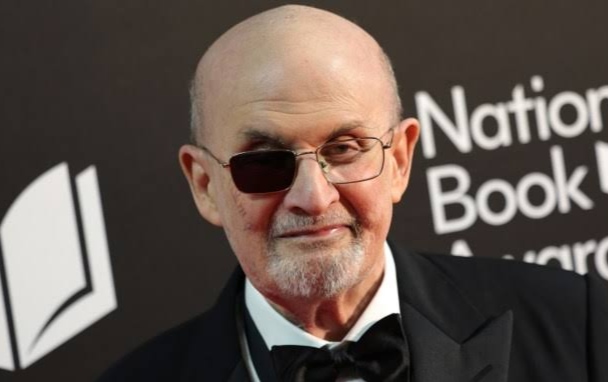
In August 2022, Salman Rushdie survived a knife attack during a public event in New York. The assault left him with serious injuries, including the loss of sight in one eye. Rather than retreat from public life, he later reflected on the experience with remarkable honesty and resilience, reminding readers of literature’s enduring power even in the face of violence.
Away from public debates, Salman Rushdie has led a life filled with intellectual curiosity, travel, and cultural engagement. He has been married several times and is the father of one son.
Friends and fellow writers often describe Salman Rushdie as witty, thoughtful, and endlessly fascinated by stories from different cultures. His essays reveal a lifelong interest in cinema, politics, mythology, history, and global literature, reflecting a mind that never stopped exploring new ideas.
The influence of Salman Rushdie extends far beyond his own novels. Countless contemporary writers have drawn inspiration from his fearless imagination, innovative narrative techniques, and willingness to confront difficult subjects.
Universities across the world continue to teach Salman Rushdie’s works as essential texts in postcolonial studies and modern literature. His novels have expanded the possibilities of English-language fiction while encouraging readers to question accepted versions of history and identity.
More importantly, Salman Rushdie’s career reminds us that literature possesses extraordinary power. Stories can challenge authority, preserve memory, bridge cultures, and inspire conversations that continue long after the final page has been turned.
“What is freedom of expression? Without the freedom to offend, it ceases to exist.”
“Books choose their authors.”
“To understand just one life, you have to swallow the world.”
“A poet’s work is to name the unnameable.”
“Those who do not have power over the story that dominates their lives have power over nothing else.”
“Language is courage.”
Salman Rushdie is an Indian-born British-American novelist and essayist celebrated for his imaginative storytelling, magical realism, and influential contributions to modern literature.
He is best known for award-winning novels such as Midnight’s Children and The Satanic Verses, as well as his strong advocacy for freedom of expression.
Midnight’s Children is widely regarded as Salman Rushdie’s greatest novel and one of the finest works of twentieth-century English literature.
Yes. Salman Rushdie won the Booker Prize in 1981 for Midnight’s Children. The novel later received the Booker of Bookers and Best of the Booker honours.
His writing combines magical realism, historical fiction, satire, mythology, and richly imaginative language while exploring themes of identity, migration, memory, religion, and politics.
Salman Rushdie’s life illustrates that literature is never confined to the pages of a book. It has the power to inspire, provoke, comfort, and transform societies. Across decades marked by acclaim, controversy, hardship, and remarkable resilience, he has continued to defend the belief that stories matter because they preserve the complexity of human experience.
His novels ask readers to embrace uncertainty, celebrate imagination, and recognise that history is rarely a single, unquestioned narrative. That enduring commitment to fearless storytelling ensures that Salman Rushdie’s voice will remain a vital part of world literature for generations to come.