Physical Address
304 North Cardinal St.
Dorchester Center, MA 02124
Physical Address
304 North Cardinal St.
Dorchester Center, MA 02124

Agatha Christie remains one of the most celebrated mystery writers in literary history.
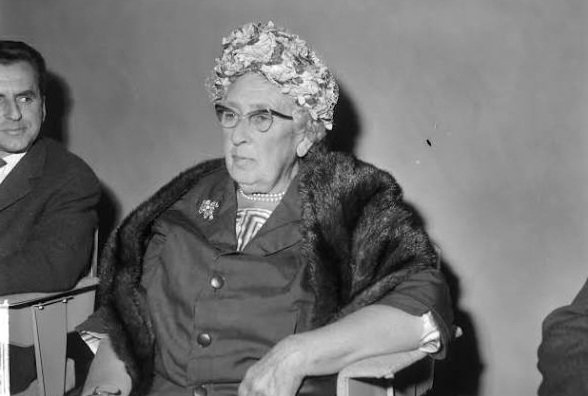
Known as the “Queen of Crime,” Christie created some of fiction’s most recognizable detectives, including Hercule Poirot and Miss Marple.
From ingenious locked-room mysteries and country-house murders to psychological thrillers and stories filled with unexpected twists, her novels have entertained generations of readers. With dozens of novels and collections to choose from, however, deciding where to begin can be difficult.
So, what are the best Agatha Christie books to read?
This guide explores 15 of Agatha Christie’s most notable and widely read novels, including famous mysteries such as And Then There Were None, Murder on the Orient Express, The Murder of Roger Ackroyd, and Death on the Nile.
Whether you are discovering Christie for the first time or looking for another classic mystery to read, these books offer a great introduction to her remarkable body of work.
| Book | Year | Main Detective/Focus | Why Read It? |
|---|---|---|---|
| And Then There Were None | 1939 | Ensemble mystery | Atmospheric and brilliantly constructed |
| Murder on the Orient Express | 1934 | Hercule Poirot | One of Christie’s most famous mysteries |
| The Murder of Roger Ackroyd | 1926 | Hercule Poirot | Famous for its unusual narrative technique |
| Death on the Nile | 1937 | Hercule Poirot | A glamorous setting with complex motives |
| The ABC Murders | 1936 | Hercule Poirot | A serial-killer mystery with a clever structure |
| Crooked House | 1949 | Detective mystery | A dark family-centered mystery |
| Five Little Pigs | 1942 | Hercule Poirot | A murder investigated through memories |
| A Murder Is Announced | 1950 | Miss Marple | A classic village mystery |
| The Mysterious Affair at Styles | 1920 | Hercule Poirot | Introduces Poirot |
| The Moving Finger | 1942 | Miss Marple | Suspenseful mystery involving anonymous letters |
| Death in the Clouds | 1935 | Hercule Poirot | A murder aboard an airplane |
| Cards on the Table | 1936 | Hercule Poirot | A murder involving four detectives and four suspects |
| The Body in the Library | 1942 | Miss Marple | A quintessential Miss Marple mystery |
| Peril at End House | 1932 | Hercule Poirot | A tense seaside mystery |
| Curtain | 1975 | Hercule Poirot | Poirot’s final case in publication order |
Publication year: 1939
Detective: Ensemble mystery
If you want to read only one Agatha Christie novel, And Then There Were None is one of the most compelling places to start.
The story brings ten strangers to an isolated island under mysterious circumstances. Each person has apparently been invited for a different reason, but they soon discover that their host is nowhere to be found.
Then the deaths begin.
As the number of people on the island decreases, suspicion spreads among the survivors. Everyone has secrets, and nobody knows who will be targeted next.
Unlike many Christie novels, the story does not center on Hercule Poirot or Miss Marple. Instead, Christie creates tension through the characters, setting, clues, and steadily increasing paranoia.
The novel is particularly memorable for its isolated setting and carefully constructed suspense.
Best for: Readers who enjoy atmospheric mysteries, psychological tension, and ensemble casts.
Publication year: 1934
Detective: Hercule Poirot
Murder on the Orient Express is arguably one of the most recognizable Agatha Christie mysteries.
Hercule Poirot is traveling aboard the luxurious Orient Express when an unexpected snowdrift brings the train to a halt. During the night, one of the passengers is murdered.
The train is isolated, and the murderer must still be among the passengers.
Poirot begins interviewing everyone aboard and discovers that almost every person appears to have something to hide.
The novel is a classic example of Christie’s ability to turn a confined setting into an elaborate mystery. Each passenger provides another piece of the puzzle, and the investigation gradually reveals a much more complicated situation than it first appears.
Best for: First-time Christie readers and fans of classic detective mysteries.
Publication year: 1926
Detective: Hercule Poirot
The Murder of Roger Ackroyd is one of Agatha Christie’s most discussed novels because of the way its mystery is constructed.
Hercule Poirot becomes involved in the investigation after Roger Ackroyd is found murdered in his home. As Poirot examines the case, seemingly ordinary details begin to take on greater importance.
The novel is especially notable for its use of narration and its approach to revealing information to the reader.
Rather than relying only on dramatic action, Christie builds the mystery through conversations, observations, clues, and carefully controlled information.
For readers who enjoy trying to solve a mystery before the detective reveals the answer, this is an essential Agatha Christie book.
Best for: Readers who love classic whodunits and carefully constructed mysteries.
Publication year: 1937
Detective: Hercule Poirot
Set against the backdrop of Egypt, Death on the Nile combines travel, romance, jealousy, wealth, and murder.
Hercule Poirot is taking a journey along the Nile when a wealthy young woman is murdered. The passengers aboard the river steamer all have their own relationships, secrets, and possible motives.
As Poirot investigates, the number of potential suspects becomes increasingly complicated.
One of the novel’s strengths is its combination of an exotic setting with a traditional Christie-style murder investigation. The confined environment gives Poirot a limited group of suspects while the characters’ relationships provide numerous possible motives.
Best for: Readers who enjoy travel mysteries, character-driven plots, and classic Poirot investigations.
Publication year: 1936
Detective: Hercule Poirot
In The ABC Murders, Hercule Poirot faces an unusual criminal who appears to be following an alphabetical pattern.
Letters begin arriving before murders, and the killer seems determined to challenge Poirot directly.
The investigation becomes a race against time as Poirot tries to understand the pattern behind the crimes.
Unlike a traditional single-location murder mystery, this novel gives Christie an opportunity to create a broader investigation involving multiple locations and victims.
Poirot’s attention to seemingly insignificant details becomes particularly important as he attempts to identify the person behind the murders.
Best for: Readers who enjoy serial-murder mysteries and detective stories with patterns and puzzles.
Publication year: 1949
Detective: Charles Hayward and investigators
Crooked House is one of Agatha Christie’s darker family mysteries.
The story revolves around the wealthy Leonides family, whose members live together in a large, unusual house. When the family patriarch dies under suspicious circumstances, attention turns toward the people closest to him.
Almost everyone appears to have a possible motive.
The novel focuses heavily on family relationships, jealousy, money, and hidden secrets. Rather than depending on one famous detective, Christie allows the mystery to develop through the family’s complicated dynamics.
Best for: Readers who enjoy family mysteries, secrets, and unexpected revelations.
Publication year: 1942
Detective: Hercule Poirot
Five Little Pigs is an unusual Poirot mystery because the central crime happened many years before the investigation begins.
Carla Lemarchant asks Hercule Poirot to investigate the murder of her father. Her mother was convicted of the crime, but Carla believes she was innocent.
Poirot cannot simply examine a fresh crime scene. Instead, he must reconstruct the past by interviewing people who remember what happened.
The novel demonstrates Christie’s ability to create suspense without relying on a conventional investigation happening in real time.
Best for: Readers who enjoy psychological mysteries, old cases, and investigations based on memories.
Publication year: 1950
Detective: Miss Marple
A Murder Is Announced is one of the best books for readers who want to meet Miss Marple.
The mystery begins with a strange announcement in a local newspaper stating that a murder will take place at a particular time and location.
Naturally, curious people gather.
What initially appears to be an unusual invitation quickly turns into a genuine murder investigation.
Miss Marple’s knowledge of human behavior and village life becomes essential as she attempts to understand the people involved.
The novel showcases one of Christie’s recurring ideas: appearances can be misleading, and ordinary people may hide extraordinary secrets.
Best for: Readers who prefer Miss Marple and traditional village mysteries.
Publication year: 1920
Detective: Hercule Poirot
The Mysterious Affair at Styles introduced readers to one of Agatha Christie’s most famous creations: Hercule Poirot.
The story takes place at Styles Court, where wealthy Emily Inglethorp dies under suspicious circumstances.
Poirot, who is staying nearby, becomes involved in the investigation.
The novel established many characteristics that would become associated with Poirot: his meticulous attention to detail, logical reasoning, distinctive personality, and belief in the importance of using the “little grey cells.”
For readers who want to experience Christie’s work from the beginning, this is an important book to consider.
Best for: Readers who want to start the Poirot series from its beginning.
Publication year: 1942
Detective: Miss Marple
In The Moving Finger, a quiet English village is disturbed by a series of anonymous letters containing unpleasant accusations about local residents.
At first, the letters seem like malicious gossip.
But when the situation becomes connected to a death, the mystery takes a much more serious turn.
The novel explores how quickly rumors can affect a close-knit community and how difficult it can be to distinguish truth from accusation.
Miss Marple’s understanding of human nature once again becomes an important part of the investigation.
Best for: Readers who enjoy village mysteries and stories involving secrets and rumors.
Publication year: 1935
Detective: Hercule Poirot
What happens when a murder takes place thousands of feet above the ground?
That’s the central premise of Death in the Clouds.
Hercule Poirot is traveling by airplane when one of the passengers is found dead. Since the possible murderer must be among the people aboard the flight, Poirot begins examining the passengers and their stories.
The unusual setting gives Christie another opportunity to create a confined mystery, but this time the crime takes place in the air.
Best for: Readers who enjoy unusual settings and classic Poirot investigations.
Publication year: 1936
Detective: Hercule Poirot
Cards on the Table brings together four detectives and four possible suspects for an unusual evening of bridge.
When their host is found dead, the investigators must determine which of the four suspects committed the murder.
The game of bridge becomes an important structural element of the mystery because each detective approaches the suspects and evidence differently.
The result is a story that places considerable emphasis on psychology, observation, and deduction.
Best for: Readers who enjoy detective-focused mysteries and character psychology.
Publication year: 1942
Detective: Miss Marple
Miss Marple is awakened by shocking news: a dead body has been discovered in the library of a respectable household.
The question is simple: Who is the victim, and how did the body get there?
The mystery soon expands beyond the seemingly peaceful surroundings of the household.
The Body in the Library is a classic example of the contrast Christie often creates between an ordinary-looking community and a complicated crime hidden beneath the surface.
Best for: Readers looking for a classic Miss Marple mystery.
Publication year: 1932
Detective: Hercule Poirot
In Peril at End House, Poirot meets Nick Buckley, a young woman who appears to have narrowly escaped several potentially fatal accidents.
Poirot begins to suspect that these incidents are not accidents at all.
As he investigates, he discovers a complicated network of relationships and motives.
The novel combines suspense with a traditional country-house mystery and gives Poirot an opportunity to demonstrate his ability to recognize patterns that others overlook.
Best for: Readers who enjoy suspenseful Poirot mysteries with repeated attempts on a character’s life.
Publication year: 1975
Detective: Hercule Poirot
Curtain holds a unique place in Agatha Christie’s bibliography because it represents Hercule Poirot’s final case in the novels’ publication history.
Poirot returns to Styles, the setting where his literary career began.
Now older and physically diminished, he becomes involved in a mystery involving a dangerous individual who appears capable of encouraging others to commit murder.
The book has a different atmosphere from many earlier Poirot adventures and serves as a significant conclusion to his story.
Best for: Established Christie readers who want to explore Poirot’s final case.
The best starting point depends on what type of mystery you enjoy.
Start with Murder on the Orient Express or And Then There Were None. Both provide strong introductions to Christie’s approach to mystery and suspense.
Try:
Try:
Consider:
Try:
Agatha Christie’s two most famous detectives approach mysteries in very different ways.
Hercule Poirot is a highly methodical detective who relies heavily on logical deduction, careful questioning, and psychological observation. His investigations often involve a group of suspects whose stories must be examined closely.
Miss Marple, meanwhile, frequently draws upon her observations of people and her understanding of village life and human behavior. She may appear to be an ordinary elderly woman, but she possesses an extraordinary ability to recognize patterns in human conduct.
If you prefer elaborate puzzles and logical investigations, Poirot’s novels may appeal to you. If you enjoy human behavior, village settings, and subtle observations, Miss Marple’s mysteries offer a different experience.
Agatha Christie’s novels continue to attract readers because her mysteries are built around ideas that remain compelling: secrets, deception, motive, relationships, suspicion, and the search for truth.
Her stories also demonstrate how much can be achieved with a relatively limited setting and a carefully selected group of characters.
Another important part of Christie’s appeal is the puzzle itself. Readers are encouraged to examine clues, question motives, and attempt to solve the crime before the detective reveals the answer.
Her novels have also remained part of popular culture through numerous adaptations for film, television, theatre, and other media.
Agatha Christie wrote 66 detective novels, along with numerous short stories and other works. Her two best-known detectives are Hercule Poirot and Miss Marple.
She also wrote novels under the pseudonym Mary Westmacott, allowing her to explore subjects outside the traditional detective-story format.
Her work has been translated and published around the world, making her one of the most widely read authors in the history of crime fiction.
If you want to explore Christie’s detective fiction chronologically, you can begin with The Mysterious Affair at Styles, published in 1920, which introduced Hercule Poirot.
Some notable books in publication order include:
This is only a selection of Christie’s novels rather than a complete bibliography.
Murder on the Orient Express and And Then There Were None are two accessible starting points for readers new to Agatha Christie. Readers interested specifically in Hercule Poirot can also begin with The Mysterious Affair at Styles.
And Then There Were None and Murder on the Orient Express are among Agatha Christie’s best-known novels. The Murder of Roger Ackroyd is also particularly famous for its innovative mystery structure.
There is no single answer that applies to every reader. Murder on the Orient Express, The Murder of Roger Ackroyd, Death on the Nile, The ABC Murders, and Five Little Pigs are notable choices for readers interested in Poirot.
Readers looking for a Miss Marple mystery can begin with A Murder Is Announced or The Body in the Library. The Moving Finger is another well-known Miss Marple novel.
You generally do not need to read Christie’s novels in publication order because many of her mysteries work as standalone stories. However, reading in publication order can be interesting if you want to follow the development of characters such as Hercule Poirot and Miss Marple.
Most Agatha Christie mysteries are accessible to general readers. Her books are driven primarily by characters, dialogue, clues, investigation, and suspense rather than complicated prose.
Agatha Christie’s greatest strength is her ability to turn ordinary situations into extraordinary mysteries. A train journey, a family gathering, a village, a dinner party, or an isolated island can become the setting for an elaborate murder investigation.
From the intricate puzzle of The Murder of Roger Ackroyd to the suspense of And Then There Were None and the famous investigation aboard the Orient Express, her books offer many different ways to experience classic crime fiction.
If you’re new to the Queen of Crime, start with a novel that matches your preferred style of mystery. And if you’ve already read some of her most famous works, there are dozens of lesser-known Christie mysteries waiting to be discovered.