William Faulkner Books: A Complete Guide to His Most Important Works and Literary Legacy
 Satish kumar
 William Faulkner remains one of the most influential writers in the history of modern literature.
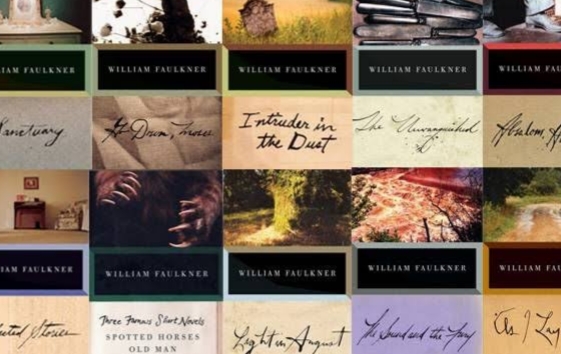
His novels reshaped the narrative possibilities of fiction and created an entirely new way of portraying the human experience. Through complex storytelling, deep psychological exploration, and richly detailed settings, William Faulkner books continue to challenge and inspire readers nearly a century after they were written.
Faulkner’s literary universe—often centered around the fictional Yoknapatawpha County in Mississippi—examines themes of memory, race, identity, morality, and the haunting legacy of the American South. His works do not merely tell stories; they explore how history, trauma, and culture shape individuals and societies.
For readers interested in literary classics, understanding William Faulkner books means engaging with some of the most ambitious and innovative novels ever written. Many of his works are studied in universities worldwide, praised by critics, and widely regarded as masterpieces of 20th-century fiction.
This in-depth guide explores Faulkner’s life, his most important books, literary themes, influence, and why his works remain essential reading in 2026.
William Faulkner Overview
| Attribute | Details |
|---|---|
| Full Name | William Cuthbert Faulkner |
| Birth | September 25, 1897 |
| Death | July 6, 1962 |
| Age at Death | 64 |
| Profession | Novelist, Short Story Writer, Screenwriter |
| Nationality | American |
| Literary Movement | Southern Gothic, Modernism |
| Genres | Literary Fiction, Historical Fiction |
| Famous Works | The Sound and the Fury, As I Lay Dying, Light in August, Absalom, Absalom! |
| Awards | Nobel Prize in Literature (1949), Pulitzer Prize (1955, 1963) |
| Net Worth (Historical Estimate) | Approx. $10 million equivalent today |
| Signature Setting | Yoknapatawpha County, Mississippi |
Author Biography
William Faulkner was born in New Albany, Mississippi, in 1897 and spent most of his life in the American South.

His upbringing deeply influenced his writing, particularly his exploration of Southern culture, racial tensions, and the lingering effects of the Civil War.
Although Faulkner did not complete college, he developed a strong literary interest early in life. His early career included poetry and novels that received little attention. However, by the late 1920s and early 1930s, Faulkner began producing the groundbreaking novels that would establish his reputation as one of America’s greatest writers.
His writing style was highly experimental. Faulkner used techniques such as:
- Stream-of-consciousness narration
- Multiple perspectives
- Nonlinear timelines
- Deep psychological characterization
These innovations helped define modernist literature.
In 1949, Faulkner was awarded the Nobel Prize in Literature, recognized for his “powerful and artistically unique contribution to the modern American novel.”
Today, scholars widely consider Faulkner alongside writers like Ernest Hemingway, James Joyce, and Virginia Woolf as pioneers of literary modernism.
The Literary World of Yoknapatawpha County
One of Faulkner’s most remarkable achievements was the creation of Yoknapatawpha County, a fictional Mississippi county that serves as the setting for many of his novels and stories.
Faulkner once described it as:
“My own little postage stamp of native soil.”
Within this fictional world, Faulkner explored generations of families, their histories, and their conflicts. Characters and events often appear across multiple novels, creating a shared literary universe decades before the concept became popular in modern storytelling.
Key William Faulkner Books
1. The Sound and the Fury (1929)
Overview
Often considered Faulkner’s masterpiece, The Sound and the Fury tells the story of the declining Compson family through four different narrative perspectives.
Summary
The novel unfolds through fragmented timelines and shifting narrators, including a cognitively disabled character named Benjy. Each section reveals a different perspective on the family’s tragic decline.
The story explores themes of loss, decay, memory, and the collapse of Southern aristocracy.
Key Themes
- The fall of the Old South
- Time and memory
- Family dysfunction
- Psychological trauma
Pros
- Highly innovative narrative structure
- Deep emotional intensity
- Rich psychological insight
Cons
- Difficult for first-time readers
- Nonlinear storytelling can feel confusing
Expert Reviews
Literary critics frequently rank The Sound and the Fury among the greatest American novels ever written. Harold Bloom called it a “masterpiece of modernist fiction.”
Reader Impact
Readers often describe the novel as challenging yet deeply rewarding. It is widely studied in literature courses and remains a benchmark for experimental storytelling.
2. As I Lay Dying (1930)
Summary
This novel follows the Bundren family as they journey across Mississippi to bury their deceased mother, Addie Bundren.
The story is told through 15 different narrators, creating a mosaic of perspectives that reveal the family’s struggles and motivations.
Key Themes
- Death and mourning
- Poverty and survival
- Family loyalty
- Existential struggle
Pros
- Shorter and more accessible than many Faulkner novels
- Powerful emotional storytelling
- Unique narrative voices
Cons
- Multiple narrators can feel overwhelming
- Some sections are intentionally ambiguous
Expert Commentary
Many critics praise the novel for its blend of dark humor and tragedy. Literary scholars often consider it one of Faulkner’s most innovative works.
Reader Impact
Readers frequently find the book surprisingly emotional despite its experimental structure.
3. Light in August (1932)
Summary
Light in August weaves together several storylines centered around racial identity, isolation, and moral conflict in the American South.
One of the novel’s central characters, Joe Christmas, struggles with questions about his racial identity and place in society.
Key Themes
- Race and identity
- Religion and morality
- Isolation and belonging
Pros
- Powerful exploration of race in America
- Complex characters
- Deep social commentary
Cons
- Some disturbing scenes
- Complex narrative structure
Critical Reception
Many scholars consider Light in August one of the most powerful literary examinations of race in early 20th-century American fiction.
4. Absalom, Absalom! (1936)
Summary
This novel explores the rise and fall of Thomas Sutpen, a man obsessed with building a Southern dynasty.
The story unfolds through multiple narrators attempting to reconstruct Sutpen’s mysterious past.
Key Themes
- Obsession with legacy
- The mythology of the South
- Race and power
- Historical memory
Pros
- Deep philosophical themes
- Rich historical context
- Highly layered storytelling
Cons
- Considered one of Faulkner’s most difficult novels
- Requires careful reading
Expert Review
Literary critics often rank Absalom, Absalom! among the top five American novels ever written.
5. Sanctuary (1931)
Summary
Sanctuary is one of Faulkner’s darkest and most controversial novels.
The story centers on Temple Drake, a young woman whose life becomes entangled with criminals and violence.
Key Themes
- Moral corruption
- Violence and justice
- Social hypocrisy
Pros
- Fast-paced narrative compared to other Faulkner works
- Gripping plot
Cons
- Extremely disturbing subject matter
Historical Context
The novel generated controversy upon release but became a commercial success, helping Faulkner financially.
Literary Themes in William Faulkner Books
1. The Decline of the American South
Many William Faulkner books examine how the Civil War and slavery shaped Southern society.
2. Memory and Time
Faulkner often used nonlinear timelines to show how memory shapes identity.
3. Race and Identity
Faulkner confronted racial tensions long before many American writers addressed the issue directly.
4. Human Psychology
His characters often face internal conflicts that reveal deep emotional complexity.
Impact on Literature
William Faulkner’s influence extends far beyond American literature.
Writers influenced by Faulkner include:
- Gabriel García Márquez
- Toni Morrison
- Cormac McCarthy
- Haruki Murakami
His narrative techniques helped inspire magical realism, experimental fiction, and modern literary storytelling.
Criticism of William Faulkner Books
Despite his acclaim, Faulkner’s works have faced criticism.
Common Criticisms
- Difficult writing style
- Complex narrative structures
- Heavy themes and dark subject matter
Some readers also debate Faulkner’s portrayal of race and Southern culture.
However, many scholars argue that his work reflects the complicated historical realities of his time.
William Faulkner in 2026: Legacy and Modern Relevance
In 2026, William Faulkner books remain widely read and studied.
Recent developments include:
- New annotated editions of his novels
- Continued academic research on Yoknapatawpha County
- Adaptations and literary discussions in universities worldwide
Faulkner’s Nobel Prize speech continues to inspire writers with its famous line:
“The human heart in conflict with itself is the only thing worth writing about.”
FAQs About William Faulkner Books
What is William Faulkner’s most famous book?
The Sound and the Fury is widely considered his most famous and influential novel.
Which William Faulkner book should beginners read?
Many readers start with As I Lay Dying because it is shorter and easier to follow than his other works.
How many books did William Faulkner write?
Faulkner wrote 19 novels, over 120 short stories, and several screenplays.
Why are William Faulkner books difficult?
His works often use nonlinear timelines, multiple narrators, and stream-of-consciousness writing.
Did William Faulkner win the Nobel Prize?
Yes. He won the Nobel Prize in Literature in 1949.
Key Takeaways
- William Faulkner is one of the greatest writers of modern literature.
- His novels explore complex themes like race, memory, and Southern history.
- The Sound and the Fury, As I Lay Dying, and Absalom, Absalom! are among his most important works.
- His experimental storytelling techniques changed the structure of modern fiction.
- Even in 2026, William Faulkner books remain essential reading for literature enthusiasts.
About the Author