7 Best Kazuo Ishiguro Books You Must Read: From Never Let Me Go to Klara and the Sun
 Satish kumar
 Kazuo Ishiguro occupies a rare place in modern literature.
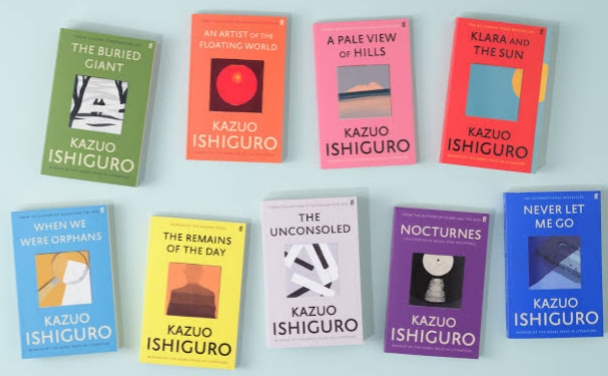
His novels do not overwhelm with dramatic events or loud declarations; instead, they unfold with quiet precision, often revealing their deepest truths in what remains unsaid. Awarded the Nobel Prize in Literature in 2017, Ishiguro has been recognized for crafting narratives that uncover “the abyss beneath our illusory sense of connection with the world.”
Overview Table: Kazuo Ishiguro
| Attribute | Details |
|---|---|
| Full Name | Kazuo Ishiguro |
| Born | November 8, 1954 |
| Age (2026) | 71 years |
| Nationality | British (born in Japan) |
| Profession | Novelist, Screenwriter, Short Story Writer |
| Net Worth | Estimated $10–15 million |
| Genres | Literary Fiction, Science Fiction, Historical Fiction, Dystopian |
| Major Works | Never Let Me Go, The Remains of the Day, Klara and the Sun |
| Awards | Nobel Prize in Literature (2017), Booker Prize (1989) |
| Known For | Emotional restraint, unreliable narrators, memory and identity |
Introduction: Why Kazuo Ishiguro’s Books Matter
His books—ranging from the restrained elegance of The Remains of the Day to the haunting dystopia of Never Let Me Go—explore memory, identity, loss, and the fragile stories people construct to survive emotionally. In an era dominated by fast-paced storytelling, Ishiguro’s work invites readers to slow down and confront the unsettling ambiguities of human experience.
As of 2026, Ishiguro continues to remain culturally relevant, especially with renewed discussions around AI ethics, memory, and humanity, largely driven by his recent novel Klara and the Sun and ongoing interviews about artificial intelligence and empathy.
Author Biography: The Life Behind the Literature
Kazuo Ishiguro was born in Nagasaki, Japan, in 1954, and moved to the United Kingdom at the age of five.
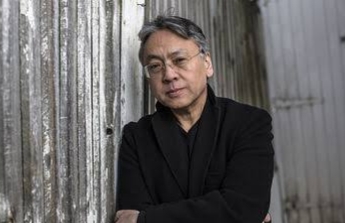
This early displacement profoundly shaped his literary imagination. His writing often reflects a sense of cultural dislocation, where characters exist between worlds—geographically, emotionally, or psychologically.
He studied English and Philosophy at the University of Kent and later pursued creative writing at the University of East Anglia. His early novels focused on Japan, despite his upbringing in Britain, highlighting his complex relationship with memory and identity.
Key Milestones:
- 1982: Debut novel A Pale View of Hills
- 1986: An Artist of the Floating World shortlisted for Booker Prize
- 1989: Won Booker Prize for The Remains of the Day
- 2005: Global success with Never Let Me Go
- 2017: Nobel Prize in Literature
- 2021: Release of Klara and the Sun
Key Kazuo Ishiguro Books (Detailed Analysis)
1. The Remains of the Day (1989)
Summary
Set in post-war England, the novel follows Stevens, a butler who has dedicated his life to serving an English lord. Through a road trip narrative, Stevens reflects on his past, gradually revealing suppressed emotions, missed opportunities, and blind loyalty.
Key Themes
- Duty vs personal desire
- Emotional repression
- Memory and regret
- Class and identity
Pros
- Deep psychological insight
- Elegant prose
- Subtle emotional impact
Cons
- Slow-paced narrative
- Minimal action
Expert Reviews
Critics widely consider it one of the finest English novels of the 20th century. The Booker Prize win solidified Ishiguro’s reputation.
Reader Impact
Readers often describe the novel as quietly devastating, leaving a lasting emotional resonance.
2. Never Let Me Go (2005)
Summary
Set in a dystopian England, the novel follows Kathy, Tommy, and Ruth, students at a mysterious boarding school. As the story unfolds, it becomes clear they are clones created for organ donation.
Key Themes
- Humanity and ethics
- Mortality and fate
- Love and loss
- Social conditioning
Pros
- Unique dystopian concept
- Emotional storytelling
- Philosophical depth
Cons
- Ambiguity may frustrate some readers
- Limited world-building explanation
Expert Reviews
Named one of the 100 best novels of all time by TIME Magazine, it is often praised for its emotional restraint and ethical complexity.
Reader Impact
Many readers find the novel haunting, particularly its exploration of what it means to be human.
3. Klara and the Sun (2021)
Summary
Narrated by Klara, an Artificial Friend (AF), the novel explores a future where AI companions are designed for children. Klara observes human behavior, love, and illness with innocent curiosity.
Key Themes
- Artificial intelligence and empathy
- Human connection
- Faith and belief
- Technology vs humanity
Pros
- Timely and relevant topic
- Unique narrative voice
- Emotional subtlety
Cons
- Slow pacing
- Open-ended interpretation
Expert Reviews
Praised by The New York Times and The Guardian for its exploration of AI ethics and emotional intelligence.
Reader Impact
The novel resonates strongly in the age of AI, prompting reflection on relationships between humans and machines.
4. An Artist of the Floating World (1986)
Summary
Set in post-war Japan, the novel follows Masuji Ono, an aging artist reflecting on his past and his role in wartime propaganda.
Key Themes
- Guilt and responsibility
- Memory distortion
- Cultural change
Pros
- Rich historical context
- Complex character study
Cons
- Subtle narrative may feel distant
Expert Reviews
Shortlisted for the Booker Prize, it established Ishiguro as a major literary voice.
Reader Impact
Encourages reflection on personal accountability and historical memory.
5. A Pale View of Hills (1982)
Summary
The novel explores a Japanese woman living in England who reflects on her past in Nagasaki, revealing trauma and loss.
Key Themes
- Memory and trauma
- Motherhood
- Cultural displacement
Pros
- Atmospheric storytelling
- Psychological depth
Cons
- Non-linear narrative
Expert Reviews
Praised for its maturity despite being a debut novel.
Reader Impact
Readers often find it haunting and emotionally layered.
6. The Buried Giant (2015)
Summary
Set in a mythical post-Arthurian Britain, an elderly couple searches for their lost son while a mysterious mist causes collective amnesia.
Key Themes
- Memory and forgetting
- Love and aging
- Violence and peace
Pros
- Unique fantasy setting
- Philosophical depth
Cons
- Unconventional narrative style
Expert Reviews
Critically divisive but widely discussed for its ambition.
Reader Impact
Encourages reflection on whether forgetting is necessary for peace.
7. When We Were Orphans (2000)
Summary
A detective returns to Shanghai to solve the mystery of his parents’ disappearance, blurring reality and illusion.
Key Themes
- Identity
- Colonialism
- Illusion vs reality
Pros
- Intriguing premise
- Emotional depth
Cons
- Complex structure
Expert Reviews
Mixed reviews but appreciated for its ambition.
Reader Impact
Readers often interpret it as a metaphor for self-deception.
Literary Style and Recurring Themes
Kazuo Ishiguro’s writing is marked by restraint, subtlety, and introspection. His narrators are often unreliable, revealing truths indirectly.
Key Characteristics:
- Minimalist prose
- Emotional understatement
- Focus on memory and perception
- Slow, reflective pacing
Impact and Cultural Significance
Kazuo Ishiguro’s influence extends beyond literature. His works have been adapted into films (The Remains of the Day, Never Let Me Go) and discussed in academic fields such as philosophy, psychology, and AI ethics.
2026 Updates:
- Continued relevance of Klara and the Sun in AI debates
- Ongoing academic research on memory and identity
- Increasing readership among younger audiences via social media platforms
Criticism and Controversies
While widely respected, Ishiguro’s work is not without criticism.
Common Critiques:
- Slow pacing
- Ambiguous endings
- Emotional distance
However, these elements are also what many critics consider his greatest strengths.
FAQs (Featured Snippet Optimized)
What is Kazuo Ishiguro’s most famous book?
The Remains of the Day and Never Let Me Go are his most widely recognized works.
Has Kazuo Ishiguro won the Nobel Prize?
Yes, he won the Nobel Prize in Literature in 2017.
What themes are common in Kazuo Ishiguro books?
Memory, identity, loss, regret, and the nature of humanity.
Is Kazuo Ishiguro easy to read?
His prose is simple, but the themes are deep and require thoughtful reading.
Key Takeaways
- Kazuo Ishiguro is one of the most important contemporary novelists.
- His books explore memory, identity, and emotional truth.
- Works like Never Let Me Go remain highly relevant in 2026.
- His writing style is subtle, introspective, and emotionally powerful.
Continue Reading
- George Orwell Books Guide
- Albert Camus Books Overview
- Harry Potter Book Review & Summary
- Books That Explore Human Psychology
Final Reflection
Kazuo Ishiguro’s novels do not seek to impress through spectacle. Instead, they linger—quietly, persistently—long after the final page. In an age increasingly defined by noise and speed, his work remains a reminder that the deepest truths often emerge in silence.
Thank you for reading!
Stay tuned for more inspiring Books summary, Author’s spotlight, Trend Books & more get full information on TheBooksx.com
About the Author