Satish kumar
 Most people believe poverty is caused by low income, lack of opportunity, or unfair systems.
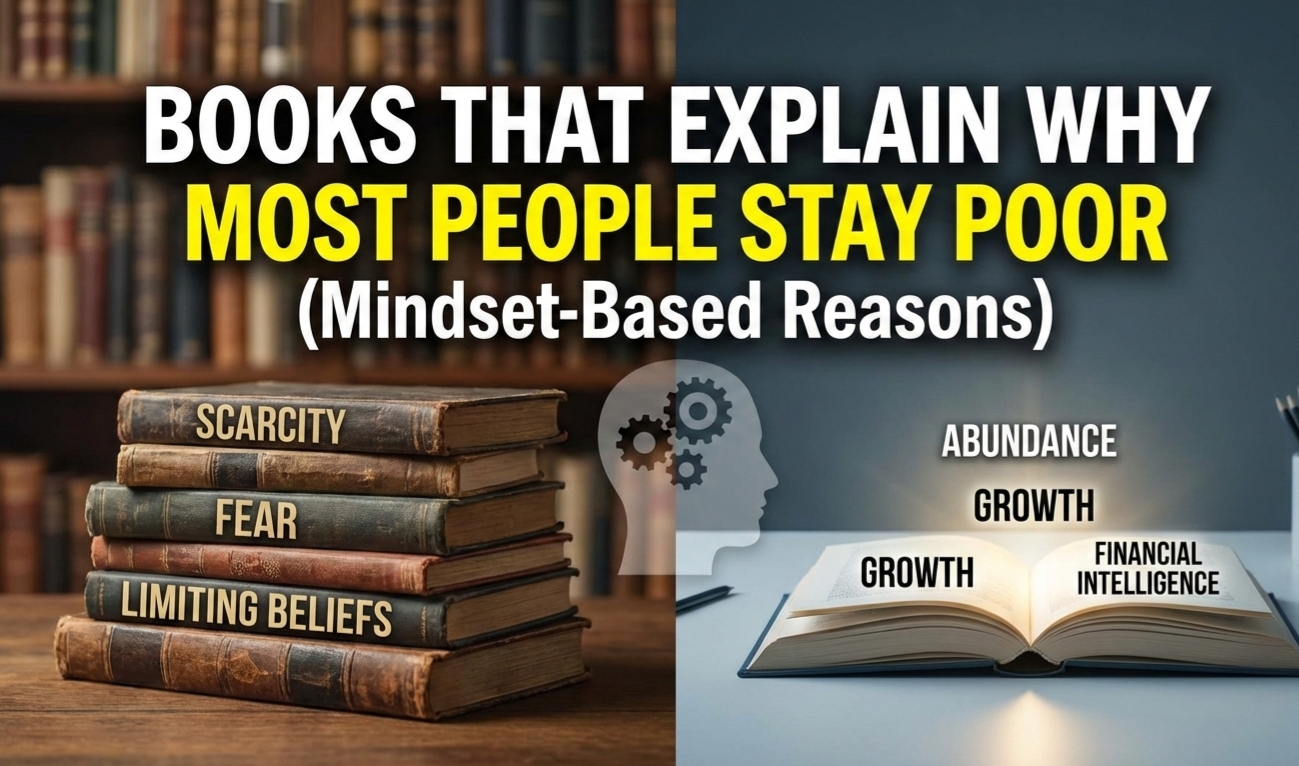
While these factors matter, they are rarely the full explanation. Across cultures and generations, one pattern repeats itself quietly: the same financial struggles passed down through the same ways of thinking.
Money does not disappear by accident. It leaks through habits, beliefs, fears, and decisions formed long before the first paycheck arrives. Some people earn little and still grow wealthy over time. Others earn more and remain trapped. The difference is not intelligence or luck—it is mindset.
This article explores books that explain why most people stay poor, not through blame or shame, but through honest examinations of human behavior, psychology, and belief systems. These books do not promise instant wealth. Instead, they reveal uncomfortable truths about how people think, avoid responsibility, fear risk, and repeat patterns they never question.
Rich Dad Poor Dad by Robert Kiyosaki
Book Summary
Robert Kiyosaki contrasts two father figures in his life—his biological father (“Poor Dad”) and his best friend’s father (“Rich Dad”). One values job security, education, and stability. The other prioritizes financial education, assets, and ownership. The book argues that most people remain poor because they were taught to work for money instead of learning how money works.
Key Mindset Lessons
- Poor people focus on income; rich people focus on assets
- Fear of loss keeps people stuck in safe but limiting paths
- Schools teach academics, not financial intelligence
- Comfort zones are more dangerous than risk
Author Snapshot
Robert Kiyosaki is an entrepreneur and financial educator known for challenging traditional ideas about work, savings, and retirement.
Reflection
This book often feels confrontational because it dismantles beliefs many people inherit from well-meaning parents. What makes it powerful is not its technical advice, but its insistence that financial struggle is often learned, not forced. The discomfort it creates is the beginning of awareness.
Notable Quotes
- “The poor and the middle class work for money. The rich have money work for them.”
- “It’s not how much money you make. It’s how much you keep.”
The Psychology of Money by Morgan Housel
Book Summary
This book explains money behavior through psychology rather than formulas. Morgan Housel shows how fear, ego, patience, and past experiences shape financial outcomes more than intelligence.
Key Mindset Lessons
- Financial decisions are emotional, not logical
- Poor habits compound just like good ones
- Short-term thinking creates long-term poverty
- Survival matters more than chasing returns
Author Snapshot
Morgan Housel is a former financial columnist known for blending behavioral science with real-world money stories.
Reflection
This book explains why people sabotage themselves even when they know better. It treats poor financial outcomes as human errors, not moral failures. The insight is quiet but lasting: wealth grows when emotions are disciplined, not when income rises.
Notable Quotes
- “Doing well with money has little to do with how smart you are.”
- “Wealth is what you don’t see.”
Think and Grow Rich by Napoleon Hill
Book Summary
Based on decades of interviews with wealthy individuals, the book argues that poverty is rooted in limiting beliefs, fear, and lack of definite purpose.
Key Mindset Lessons
- Fear of failure paralyzes action
- Clear goals are rare—and costly to ignore
- Subconscious beliefs shape financial reality
- Persistence separates success from stagnation
Author Snapshot
Napoleon Hill was an early pioneer of success psychology and mindset-driven achievement.
Reflection
Despite its age, this book remains relevant because human fear has not evolved. Many people stay poor not because they lack ability, but because they never fully believe they deserve more.
Notable Quotes
- “Poverty is attracted to the one whose mind is favorable to it.”
- “What the mind can conceive and believe, it can achieve.”
Secrets of the Millionaire Mind by T. Harv Eker
Book Summary
Eker argues that everyone carries a “money blueprint” shaped by childhood experiences. This blueprint determines financial behavior unconsciously.
Key Mindset Lessons
- People earn what aligns with their identity
- Complaining reinforces financial stagnation
- Responsibility creates control
- Playing small feels safe—but costs everything
Reflection
This book explains why many people self-sabotage just as success approaches. Their internal identity rejects growth before reality does.
Notable Quotes
- “Your income can grow only to the extent that you do.”
- “How you do anything is how you do everything.”
The Millionaire Fastlane by MJ DeMarco
Book Summary
DeMarco criticizes the traditional “go to school, get a job, retire late” model. He claims most people stay poor because they rely on slow systems that favor institutions, not individuals.
Key Mindset Lessons
- Time is more valuable than money
- Job dependency limits freedom
- Ownership accelerates wealth
- Comfort delays independence
Reflection
This book feels aggressive but honest. It exposes how patience without leverage becomes stagnation.
Notable Quotes
- “Wealth is built on value, not time.”
- “Job security is an illusion.”
Quick Takeaways Table
| Book Title | Core Reason People Stay Poor | Focus Area |
|---|---|---|
| Rich Dad Poor Dad | No asset-building mindset | Financial education |
| The Psychology of Money | Emotional money decisions | Behavior |
| Think and Grow Rich | Fear & lack of belief | Mindset |
| Millionaire Mind | Identity-based limits | Self-image |
| Millionaire Fastlane | Slow wealth systems | Ownership |
Pros and Cons of Mindset-Based Wealth Books
Pros
- Reveal invisible mental patterns
- Encourage responsibility and awareness
- Applicable across income levels
Cons
- Can feel uncomfortable or confronting
- Not quick-fix solutions
- Require long-term internal change
Conclusion: Poverty Persists Where Thinking Never Changes
Money follows belief. Not instantly, not magically—but consistently. These books reveal a truth many avoid: financial struggle is often protected by habits people refuse to question.
People stay poor when fear feels safer than growth. When comfort outweighs curiosity. When responsibility is outsourced to circumstances. These books do not shame poverty; they expose its mental roots.
Change begins not with earning more—but with thinking differently.
FAQs
1. Are these books blaming poor people?
No. They focus on behavior patterns, not worth or intelligence.
2. Can mindset really affect income?
Yes. Decisions, risks, habits, and patience are mindset-driven.
3. Are these books useful without money to invest?
Absolutely. Most focus on thinking, not capital.
4. Which book should beginners start with?
Rich Dad Poor Dad or The Psychology of Money.
5. Do these books guarantee wealth?
No. They offer clarity, not promises.
6. Why do people resist these ideas?
Because they challenge comfort and inherited beliefs.
Thank you for reading!
Stay tuned for more inspiring Books summary, Author spotlight, Trend Books & more get full information on TheBooksx.com
About the Author