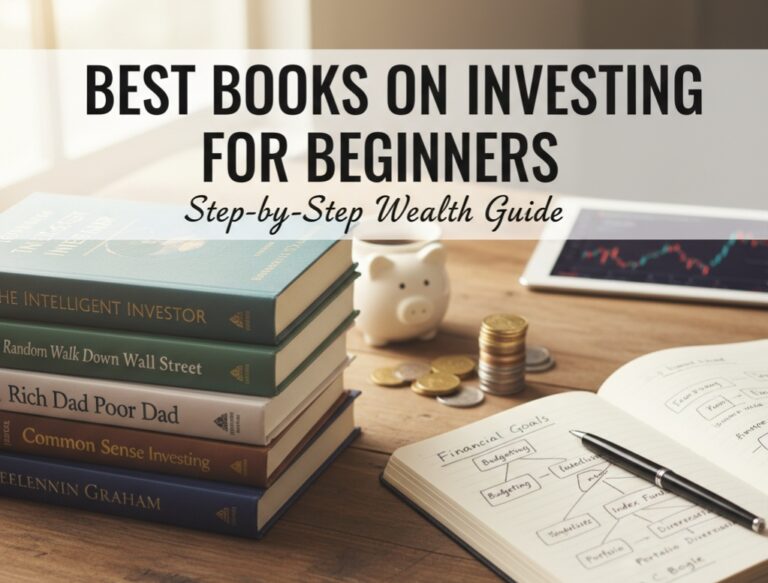
Books That Help You Develop a Wealth Mindset (Shift From Poor to Rich Thinking)
 Satish kumar
 Money is often treated as the destination. In reality, it is a side effect.

Long before wealth appears in bank accounts, it takes root in beliefs, habits, and the quiet decisions made when no one is watching. A wealth mindset is not about greed or luxury. It is about understanding value, time, risk, and responsibility.
The difference between poor thinking and rich thinking rarely lies in intelligence or opportunity. It lies in perception. The books below do not promise overnight riches. Instead, they slowly rewire how money is viewed, earned, protected, and grown. These are books that reshape the inner framework from which wealth naturally follows.
Books That Help You Develop a Wealth Mindset
1. Rich Dad Poor Dad by Robert T. Kiyosaki
Book Summary
This book contrasts two opposing approaches to money through the influence of two father figures—one highly educated yet financially stressed, the other less formally educated but financially independent. The narrative focuses on financial literacy, asset-building, and breaking free from the paycheck-to-paycheck cycle.
Key Lessons & Themes
- Assets put money in your pocket; liabilities take money out
- Schools teach academics, not financial intelligence
- Employees work for money; investors make money work for them
- Wealth grows through ownership, not income alone
Author Snapshot
Robert Kiyosaki is an entrepreneur and financial educator known for challenging traditional ideas about work, education, and money.
Personal Reflection
This book feels disruptive, almost uncomfortable at times. It forces a confrontation with deeply held beliefs inherited from family and society. Its power lies not in complex strategies but in changing how money itself is classified and understood.
Notable Quotes
- “The rich don’t work for money.”
- “It’s not how much money you make, but how much you keep.”
- “Financial freedom is available to those who learn about it.”
2. The Psychology of Money by Morgan Housel
Book Summary
Rather than formulas or tactics, this book explores how human behavior, emotions, and personal experiences shape financial outcomes. It explains why people with similar incomes often end up with vastly different financial lives.
Key Lessons & Themes
- Wealth is more about behavior than intelligence
- Time and compounding outperform talent
- Risk tolerance matters more than returns
- Enough is often more powerful than more
Author Snapshot
Morgan Housel is a former Wall Street Journal columnist and a respected voice in behavioral finance.
Personal Reflection
This book reads like quiet wisdom rather than instruction. It does not rush. It lingers. It reminds that wealth is not about impressing others, but about peace, control, and long-term thinking.
Notable Quotes
- “Doing well with money has little to do with how smart you are.”
- “Wealth is what you don’t see.”
- “Getting money is one thing. Keeping it is another.”
3. Think and Grow Rich by Napoleon Hill
Book Summary
Based on decades of research on successful individuals, this classic argues that wealth begins as a clearly defined desire combined with belief, persistence, and disciplined thought.
Key Lessons & Themes
- Thoughts shape outcomes
- Desire backed by faith becomes power
- Persistence separates success from failure
- Clarity of purpose attracts opportunity
Author Snapshot
Napoleon Hill was an early self-development writer who studied industrialists and entrepreneurs of his era.
Personal Reflection
Some ideas feel old-fashioned, yet the core message remains timeless. This book plants the belief that mindset is not motivational fluff—it is the foundation of achievement.
Notable Quotes
- “What the mind can conceive and believe, it can achieve.”
- “Patience, persistence, and perspiration make an unbeatable combination.”
4. Secrets of the Millionaire Mind by T. Harv Eker
Book Summary
This book explores how subconscious money blueprints—formed in childhood—control financial outcomes in adulthood. It argues that without changing internal programming, external success rarely lasts.
Key Lessons & Themes
- Money habits are learned, not inherited
- Inner beliefs set financial ceilings
- Rich thinking focuses on growth and value
- Awareness leads to change
Personal Reflection
This book feels like mental housekeeping. It highlights how unnoticed thoughts quietly sabotage progress and replaces them with healthier financial perspectives.
5. The Millionaire Next Door by Thomas J. Stanley & William D. Danko
Book Summary
Based on real research, this book dismantles the myth that wealth looks flashy. Most millionaires live modestly, prioritize saving, and avoid unnecessary consumption.
Key Lessons & Themes
- Wealth is built quietly
- Frugality supports freedom
- High income does not equal wealth
- Discipline beats appearance
Personal Reflection
This book brings relief. It removes pressure to “look successful” and replaces it with a calmer, more grounded vision of wealth built slowly and intentionally.
Quick Comparison Table
| Book Title | Core Focus | Best For |
|---|---|---|
| Rich Dad Poor Dad | Asset mindset | Beginners |
| The Psychology of Money | Behavior & emotions | Long-term thinkers |
| Think and Grow Rich | Belief & desire | Mindset builders |
| Secrets of the Millionaire Mind | Mental reprogramming | Habit changers |
| The Millionaire Next Door | Quiet wealth | Realistic planners |
Pros & Cons of Wealth Mindset Books
Pros
- Shift long-held money beliefs
- Build financial confidence
- Encourage long-term thinking
- Reduce fear around money
Cons
- Results require action, not just reading
- Some concepts may feel repetitive
- Not a substitute for financial planning
Conclusion: Wealth Is a Way of Thinking First
Money follows patterns. Before it accumulates externally, it organizes internally. A wealth mindset is not about chasing money but understanding it. These books offer frameworks, reflections, and mental shifts that quietly change decisions over time. Read slowly. Reflect deeply. Let the thinking change first—the rest will follow.
FAQs: Wealth Mindset & Money Thinking
1. What is a wealth mindset?
A way of thinking that prioritizes long-term value, growth, discipline, and financial responsibility.
2. Can reading books really change financial outcomes?
Books change perspective. Perspective changes decisions. Decisions shape outcomes.
3. Which book should I start with?
Rich Dad Poor Dad for fundamentals or The Psychology of Money for depth.
4. Is a wealth mindset only for entrepreneurs?
No. It benefits employees, freelancers, investors, and students alike.
5. How long does it take to develop rich thinking?
It is gradual and continuous, shaped by consistent reflection and action.
6. Are these books relevant today?
Yes. Human behavior around money remains unchanged despite changing tools.
Thank you for reading!
Stay tuned for more inspiring Books summary, Author spotlight, Trend Books & more get full information on TheBooksx.com
About the Author