Satish kumar
 Margaret Atwood stands as one of the most intellectually formidable voices in contemporary literature.
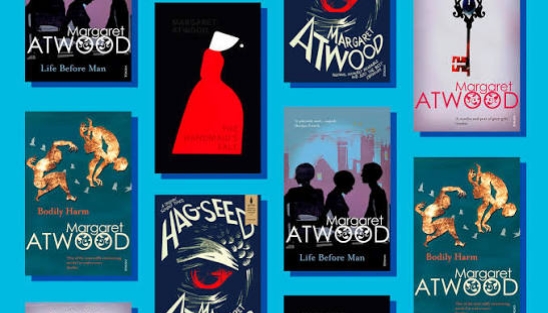
Her works are not merely stories—they are warnings, reflections, and deeply unsettling mirrors held up to society. In an era increasingly shaped by political tension, environmental crisis, and technological acceleration, Margaret Atwood books feel less like fiction and more like prophecy.
Overview Table: Margaret Atwood at a Glance
| Attribute | Details |
|---|---|
| Full Name | Margaret Eleanor Atwood |
| Birth Date | November 18, 1939 |
| Age (2026) | 86 years |
| Profession | Novelist, Poet, Essayist, Critic |
| Nationality | Canadian |
| Genre | Dystopian, Speculative Fiction, Literary Fiction, Feminism |
| Net Worth (Est.) | $20–25 million |
| Notable Awards | Booker Prize (2×), Arthur C. Clarke Award, Governor General’s Award |
| Major Works | The Handmaid’s Tale, Oryx and Crake, Alias Grace, The Testaments |
| Active Years | 1961–present |
Introduction
Her writing moves fluidly between speculative fiction, historical narratives, and psychological realism, often blending them into something uniquely unsettling. Atwood herself has resisted the label of “science fiction,” preferring the term speculative fiction—stories grounded in possibilities that already exist within our world.
What makes Atwood essential is not just her storytelling but her precision. She writes with the authority of research, the restraint of a poet, and the urgency of a philosopher. From the chilling dystopia of The Handmaid’s Tale to the bioengineered chaos of Oryx and Crake, her books continue to shape global conversations about power, identity, gender, and survival.
Author Biography
Margaret Atwood was born in Ottawa, Canada, and spent much of her childhood in the wilderness of northern Quebec due to her father’s work as an entomologist.
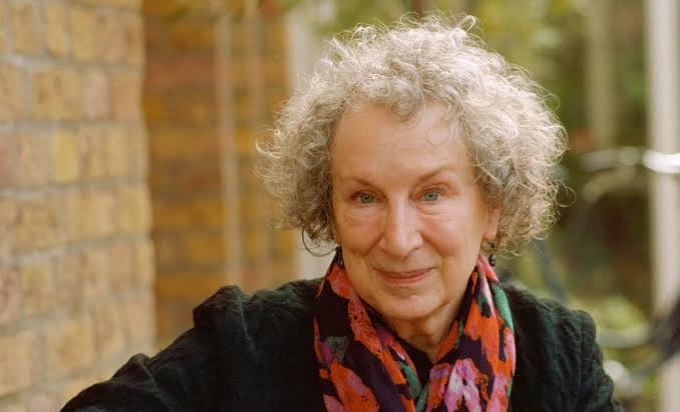
This early exposure to nature profoundly influenced her later writing, particularly her ecological concerns.
She studied at the University of Toronto and later at Harvard, where she developed her literary voice. Her early career was marked by poetry, but she soon transitioned into novels that challenged societal norms.
Atwood’s rise to global prominence came with The Handmaid’s Tale in 1985. Decades later, the book gained renewed relevance due to political shifts and its successful television adaptation. She won the Booker Prize twice—first for The Blind Assassin (2000) and later for The Testaments (2019).
2026 Updates
- Atwood remains active in literary circles, contributing essays and participating in global climate discussions.
- Recent interviews highlight her focus on AI ethics, environmental collapse, and narrative responsibility.
- Her works continue to dominate academic syllabi and streaming adaptations, sustaining her relevance across generations.
Key Works / Books by Margaret Atwood
1. The Handmaid’s Tale (1985)
Summary:
Set in the dystopian Republic of Gilead, the novel follows Offred, a woman forced into reproductive servitude. The regime controls women’s bodies under a rigid theocratic system.
Key Themes:
- Patriarchy and control
- Religious extremism
- Loss of identity
- Resistance and survival
Pros:
- Deeply unsettling and thought-provoking
- Powerful feminist narrative
- Timeless relevance
Cons:
- Emotionally heavy
- Ambiguous ending may frustrate some readers
Expert Reviews:
Critics from The New York Times and The Guardian have called it “a cornerstone of modern dystopian literature.”
Reader Impact:
The novel has sparked global debates on women’s rights and authoritarianism. It remains a cultural symbol of resistance.
2. The Testaments (2019)
Summary:
A sequel to The Handmaid’s Tale, this novel unfolds 15 years later through multiple perspectives, revealing the internal collapse of Gilead.
Key Themes:
- Power structures from within
- Redemption and complicity
- Generational resistance
Pros:
- Expands the original world
- Strong narrative voices
Cons:
- Less subtle than the original
- More plot-driven than thematic
Expert Reviews:
Winner of the Booker Prize (shared), praised for its narrative complexity.
Reader Impact:
Offers closure and deeper understanding of Gilead’s mechanisms.
3. Oryx and Crake (2003)
Summary:
In a post-apocalyptic world, Snowman recalls the events leading to humanity’s downfall caused by genetic engineering and corporate greed.
Key Themes:
- Biotechnology and ethics
- Environmental destruction
- Corporate dystopia
Pros:
- Brilliant world-building
- Philosophically rich
Cons:
- Non-linear storytelling may confuse readers
Expert Reviews:
Shortlisted for the Booker Prize; widely regarded as a modern classic.
Reader Impact:
Encourages reflection on scientific responsibility and human hubris.
4. The Year of the Flood (2009)
Summary:
A companion novel to Oryx and Crake, it explores the same catastrophe from different perspectives, focusing on a religious eco-group.
Key Themes:
- Faith vs science
- Survival ethics
- Community and isolation
Pros:
- Expands Atwood’s dystopian universe
- Strong female characters
Cons:
- Slower pacing
Expert Reviews:
Praised for its layered storytelling and environmental commentary.
Reader Impact:
Deepens emotional engagement with the MaddAddam trilogy.
5. MaddAddam (2013)
Summary:
The final book in the trilogy ties together multiple narratives as survivors attempt to rebuild civilization.
Key Themes:
- Rebirth and storytelling
- Human vs post-human identity
Pros:
- Satisfying conclusion
- Philosophical depth
Cons:
- Complex narrative structure
Reader Impact:
Leaves readers questioning the essence of humanity.
6. Alias Grace (1996)
Summary:
Based on a true story, the novel explores the life of Grace Marks, a servant convicted of murder in 19th-century Canada.
Key Themes:
- Memory and truth
- Gender and power
- Psychological ambiguity
Pros:
- Rich historical detail
- Complex character study
Cons:
- Slow pacing
Expert Reviews:
Widely praised for its narrative ambiguity and depth.
Reader Impact:
Challenges readers to question truth and perception.
7. The Blind Assassin (2000)
Summary:
A layered narrative involving a novel within a novel, unraveling family secrets and hidden relationships.
Key Themes:
- Storytelling and memory
- Love and betrayal
Pros:
- Booker Prize-winning masterpiece
- Intricate narrative
Cons:
- Requires patience
Reader Impact:
A deeply rewarding literary experience for serious readers.
8. Surfacing (1972)
Summary:
A woman returns to her childhood home in Quebec and confronts her past and identity.
Key Themes:
- Identity and alienation
- Nature vs civilization
Reader Impact:
One of Atwood’s earliest explorations of psychological depth.
Literary Analysis
Margaret Atwood’s work resists easy categorization. Her narratives operate on multiple levels—political, psychological, ecological, and philosophical.
1. Speculative Realism
Atwood’s worlds are not imaginary—they are extensions of reality. Everything she writes about has a basis in existing technology, politics, or history.
2. Feminist Lens
Her portrayal of women is neither idealized nor simplified. Instead, she explores power dynamics with unsettling honesty.
3. Environmental Consciousness
Nature in Atwood’s works is not a backdrop but a central force—often reacting violently to human exploitation.
4. Language and Structure
Her prose is precise, often poetic, and structurally innovative. She frequently uses unreliable narrators and layered storytelling.
Impact on Literature and Society
Margaret Atwood’s influence extends far beyond literature.
- Academic Influence: Her works are studied in universities worldwide.
- Cultural Impact: The Handmaid’s Tale has become a symbol in political protests.
- Media Adaptations: Successful TV series and films have brought her stories to wider audiences.
- Feminist Thought: Her books are foundational texts in gender studies.
Statistics (2026)
- Millions of copies sold worldwide
- Translated into over 40 languages
- Continued surge in readership due to streaming adaptations
Criticism
Despite her acclaim, Atwood’s work has faced criticism:
- Some argue her dystopias are overly pessimistic
- Critics occasionally find her narratives emotionally distant
- Her refusal to label her work as “science fiction” has sparked debate
Yet, these criticisms often underscore the very qualities that make her work distinctive.
FAQs (Featured Snippet Style)
Q1: What are the best Margaret Atwood books to start with?
Start with The Handmaid’s Tale, Oryx and Crake, and Alias Grace.
Q2: Is Margaret Atwood a feminist writer?
Yes, though her work explores feminism in complex and often ambiguous ways.
Q3: What genre does Margaret Atwood write?
Primarily speculative fiction, dystopian fiction, and literary fiction.
Q4: Is The Handmaid’s Tale based on true events?
Not directly, but all elements are inspired by real historical practices.
Q5: What is her most awarded book?
The Blind Assassin and The Testaments are among her most decorated works.
Key Takeaways
- Margaret Atwood’s books blend fiction with reality, making them deeply relevant
- Her works explore power, gender, environment, and identity
- The Handmaid’s Tale remains one of the most influential dystopian novels ever written
- Her storytelling is layered, intellectual, and emotionally resonant
- Atwood’s influence spans literature, politics, and global culture
Internal Linking Suggestions (for your blog thebooksx.com)
- Link to: George Orwell books (for dystopian comparisons)
- Link to: Kazuo Ishiguro books (for speculative realism)
- Link to: Top dystopian novels list
- Link to: Books like The Handmaid’s Tale
- Link to: Feminist literature reading guide
Conclusion
Margaret Atwood’s work does not comfort—it confronts. Her novels demand attention, reflection, and often, discomfort. In a world increasingly shaped by the forces she once imagined, her writing feels urgent rather than optional.
To read Margaret Atwood is to engage with the future before it arrives—and to recognize the fragile threads that hold the present together.
Thank you for reading!
Stay tuned for more inspiring Books summary, Author’s spotlight, Trend Books & more get full information on TheBooksx.com
About the Author