Satish kumar
 In 2026, Cervantes remains central to discussions about narrative form, irony, and the nature of reality in literature.
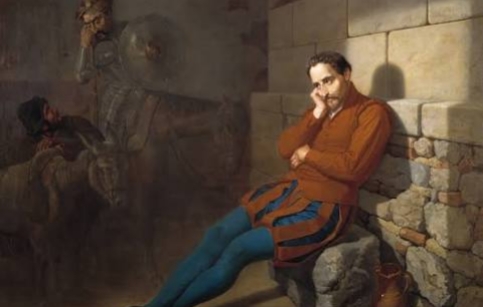
His ability to blur the line between illusion and truth feels especially relevant in an age shaped by digital identities and virtual worlds.
Overview Table: Miguel de Cervantes at a Glance
| Attribute | Details |
|---|---|
| Full Name | Miguel de Cervantes Saavedra |
| Born | September 29, 1547 |
| Died | April 22, 1616 |
| Age | 68 (at death) |
| Profession | Novelist, Poet, Playwright |
| Nationality | Spanish |
| Genre | Satire, Picaresque, Romance |
| Notable Works | Don Quixote, Novelas Ejemplares, La Galatea |
| Net Worth | Not recorded (lived modestly) |
| Literary Era | Spanish Golden Age |
| Language | Spanish |
Introduction: Why Miguel de Cervantes Still Matters in 2026
Miguel de Cervantes stands as one of the most influential figures in world literature. Often called the father of the modern novel, his work reshaped storytelling by blending realism, satire, and deep psychological insight. At the heart of his legacy lies Don Quixote, a novel so groundbreaking that it continues to influence writers, filmmakers, and philosophers more than four centuries after its publication.
Author Biography: The Life Behind the Legend
Miguel de Cervantes was born in Alcalá de Henares, Spain, during a period of political power and cultural flourishing known as the Spanish Golden Age. His life, however, was marked by hardship.
He served as a soldier and was seriously wounded in the Battle of Lepanto (1571), losing the use of his left hand. Later, he was captured by pirates and spent five years as a slave in Algiers before being ransomed.
Despite his literary ambitions, Cervantes struggled financially throughout his life. He worked as a tax collector and faced imprisonment due to financial irregularities. It was during these turbulent years that he began developing the ideas that would later define his literary career.
His masterpiece, Don Quixote, was published in two parts (1605 and 1615), achieving immediate success and securing his place in literary history.
Key Miguel de Cervantes Books
1. Don Quixote (1605, 1615)
Summary
Don Quixote follows Alonso Quixano, a man who becomes obsessed with chivalric romances and reinvents himself as a knight-errant named Don Quixote. Accompanied by his loyal squire, Sancho Panza, he embarks on a series of misadventures, mistaking windmills for giants and inns for castles.
The novel is both a parody of chivalric tales and a profound exploration of imagination, identity, and reality.
Key Themes
- Reality vs. Illusion: The tension between imagination and the real world
- Individualism: Don Quixote’s refusal to conform to societal norms
- Friendship: The evolving bond between Quixote and Sancho
- Satire of Literature: Critique of outdated literary traditions
Pros
- Widely regarded as the first modern novel
- Rich, multi-layered storytelling
- Deep philosophical insights
- Memorable and complex characters
Cons
- Lengthy and episodic structure
- Archaic language in some translations
- Can feel repetitive for modern readers
Expert Reviews
- Harold Bloom described it as “the ultimate literary work.”
- Frequently ranked among the greatest books ever written by institutions like the Norwegian Book Club.
- Scholars highlight its innovation in metafiction and narrative voice.
Reader Impact
Readers often find Don Quixote both humorous and deeply moving. It challenges perceptions of sanity, heroism, and truth, leaving a lasting intellectual and emotional impression.
2. Novelas Ejemplares (Exemplary Novels) (1613)
Summary
This collection of twelve short stories showcases Cervantes’ versatility. Each tale presents moral, social, or philosophical insights, ranging from romantic intrigue to social satire.
Notable stories include:
- Rinconete y Cortadillo
- La Gitanilla
- El Licenciado Vidriera
Key Themes
- Morality and Ethics
- Social Critique
- Human Folly and Wisdom
- Class and Identity
Pros
- Diverse storytelling styles
- Insight into Spanish society
- Compact yet impactful narratives
Cons
- Less cohesive than a novel
- Some stories feel dated in context
Expert Reviews
Critics often regard these stories as precursors to the modern short story form. They demonstrate Cervantes’ ability to compress complex ideas into concise narratives.
Reader Impact
Readers appreciate the variety and depth of these tales. They offer a broader understanding of Cervantes beyond Don Quixote.
3. La Galatea (1585)
Summary
La Galatea is a pastoral romance centered on themes of love and idealized rural life. It follows shepherds and their romantic entanglements in a stylized, poetic setting.
Key Themes
- Idealized Love
- Nature and Simplicity
- Artistic Expression
Pros
- Lyrical and poetic prose
- Insight into early Cervantes style
Cons
- Less engaging compared to later works
- Traditional and less innovative
Expert Reviews
Scholars view La Galatea as an important early work that reflects the literary conventions Cervantes would later challenge.
Reader Impact
Primarily of interest to literary enthusiasts and scholars, it provides context for Cervantes’ development as a writer.
4. The Labours of Persiles and Sigismunda (1617, posthumous)
Summary
Published after his death, this novel follows two lovers traveling across Europe while facing numerous trials. It blends romance, adventure, and spirituality.
Key Themes
- Love and Devotion
- Journey and Transformation
- Faith and Providence
Pros
- Ambitious narrative scope
- Rich in symbolism
Cons
- Complex and sometimes convoluted
- Less accessible than Don Quixote
Expert Reviews
Though less famous, some critics consider it Cervantes’ most ambitious work in terms of narrative design.
Reader Impact
Often overlooked, it rewards patient readers with its depth and philosophical undertones.
Literary Analysis: Cervantes’ Writing Style
Narrative Innovation
Cervantes pioneered metafiction, where the text acknowledges its own fictional nature. This technique influenced countless modern writers.
Humor and Satire
His humor is layered—both entertaining and critical. He exposes societal flaws while engaging readers through comedy.
Characterization
Don Quixote and Sancho Panza represent contrasting worldviews—idealism and realism—creating a dynamic philosophical dialogue.
Impact on Literature and Society
Literary Influence
- Inspired authors like Dostoevsky, Kafka, and Flaubert
- Laid the foundation for the modern novel
- Influenced narrative experimentation
Cultural Legacy
- Don Quixote adapted into films, plays, and operas
- Iconic imagery (windmills, knight-errant) embedded in global culture
Relevance in 2026
Cervantes’ exploration of illusion vs. reality resonates in the digital age, where perception and identity are increasingly fluid.
Criticism and Controversies
Common Critiques
- Episodic storytelling can feel disjointed
- Some humor may not translate across cultures
- Length and complexity challenge modern readers
Scholarly Perspective
Most criticisms are outweighed by the novel’s historical importance and enduring relevance.
2026 Updates: Cervantes in the Modern Era
- New Translations: Updated English editions focus on readability and accuracy
- Academic Research: Continued studies on metafiction and narrative theory
- Digital Humanities: Cervantes’ works analyzed using AI tools for linguistic patterns
- Global Readership: Don Quixote remains one of the most translated books worldwide
Frequently Asked Questions (FAQs)
What is Miguel de Cervantes best known for?
He is best known for Don Quixote, widely considered the first modern novel.
How many books did Cervantes write?
He wrote several works, including novels, short stories, and plays, but only a few major books are widely studied today.
Why is Don Quixote important?
It revolutionized storytelling with its realism, satire, and complex characters.
Is Cervantes still relevant today?
Yes. His themes of reality, identity, and imagination remain highly relevant in modern society.
Key Takeaways
- Miguel de Cervantes is a foundational figure in modern literature
- Don Quixote is one of the greatest and most influential novels ever written
- His works combine humor, philosophy, and social critique
- Cervantes’ storytelling techniques continue to shape literature today
- His relevance persists in both academic and cultural discussions
Final Thoughts
Miguel de Cervantes wrote during a time of profound cultural change, yet his insights feel timeless. His work captures the human struggle between dreams and reality, idealism and practicality. In doing so, he created stories that transcend language, geography, and era.
For anyone seeking to understand the evolution of literature—or the complexity of the human condition—Cervantes’ books remain essential reading.
Thank you for reading!
Stay tuned for more inspiring Books summary, Author’s spotlight, Trend Books & more get full information on TheBooksx.com
About the Author