William Shakespeare’s Wife: Anne Hathaway and the Woman History Almost Forgot
 Satish kumar
 History remembers William Shakespeare for his words.
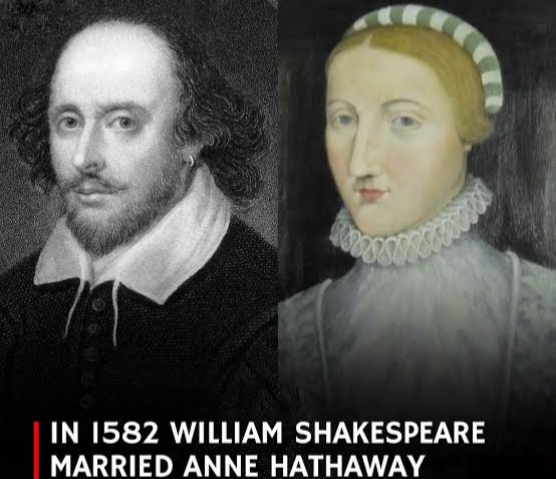
It remembers the plays, the sonnets, the thunder of his language. Yet beside that voice lived a woman whose presence was steady, debated, misunderstood, and often erased. William Shakespeare’s wife, Anne Hathaway of Shottery, has long existed in the margins—mentioned briefly, judged quickly, and rarely understood. Her story deserves more than footnotes. It deserves patience, context, and a human lens.
This article explores Anne Hathaway not as a myth or a mystery, but as a real woman navigating marriage, motherhood, distance, and survival in Elizabethan England.
Who Was William Shakespeare’s Wife? (A Clear Overview)
Anne Hathaway was born in 1555 in the village of Shottery, near Stratford-upon-Avon. She married William Shakespeare in 1582, when she was about 26 and he was 18. Their marriage followed quickly after Anne became pregnant, a fact that has fueled centuries of speculation.
They had three children:
- Susanna (born 1583)
- Hamnet and Judith, twins (born 1585)
Hamnet’s death at age eleven would later echo through Shakespeare’s work, particularly in his treatment of grief and loss.
Anne spent most of her life in Stratford while Shakespeare worked in London. This physical distance between husband and wife has often been misread as emotional distance. The truth, as with most lives, is more complex.
Life With Shakespeare: Marriage, Distance, and Duty
A Marriage Often Misunderstood
The age gap and hurried marriage have led many biographers to frame Anne as an obstacle or mistake in Shakespeare’s life. This interpretation says more about modern assumptions than historical reality.
In Elizabethan England:
- Age gaps in marriage were common
- Pregnancies before formal marriage were not rare
- Marriage was as much economic as romantic
Anne brought stability, land connections, and a functioning household. Shakespeare brought ambition, risk, and long absences.
The London Years
Shakespeare likely spent long periods in London building his career, while Anne managed the home, children, and finances in Stratford. This arrangement was not unusual for men in the arts or trade.
Evidence suggests Shakespeare:
- Returned frequently
- Invested earnings in Stratford property
- Retired there later in life
These actions point not to abandonment, but to long-term planning centered on family.
The “Second-Best Bed” Myth Explained
One line in Shakespeare’s will has shaped Anne Hathaway’s reputation for centuries. He left her his “second-best bed.”
This has often been read as an insult. In reality, historical context tells a different story:
- The best bed was typically reserved for guests
- The second-best bed was the marital bed
- It often carried emotional, not monetary, value
Rather than a slight, the bequest may have been intimate—recognizing shared life, shared sleep, shared memory.
Key Themes in Anne Hathaway’s Story
1. The Power of Quiet Lives
Anne lived without fame, without publication, without recorded monologues. Yet she sustained a household that allowed greatness to grow elsewhere.
2. Misjudgment Through Silence
Because Anne left no letters or writings, others filled the silence with assumptions. History often punishes women for not speaking in ways it later values.
3. Emotional Labor and Survival
Raising children alone for long stretches, enduring loss, managing property—these were not passive acts. They were forms of resilience.
4. Marriage Beyond Romance
Anne and William’s relationship likely contained affection, frustration, loyalty, and distance. Like most real marriages, it cannot be reduced to a single emotion.
A Brief Note on William Shakespeare (Context Only)
William Shakespeare (1564–1616) was an English playwright, poet, and actor, widely regarded as the greatest writer in the English language. His success depended not only on genius, but on the stability of a home he could return to.
That home was Anne Hathaway’s domain.
Reflection: Seeing Anne Hathaway Clearly
Anne Hathaway’s life resists drama. There are no scandalous letters, no recorded betrayals, no poetic confessions. What remains is steadiness. And steadiness rarely excites historians.
Yet when reading Shakespeare’s later plays—The Winter’s Tale, King Lear, The Tempest—one feels a deeper understanding of forgiveness, endurance, and time. It is difficult not to wonder how much of that wisdom was shaped by a woman who lived patiently while history looked elsewhere.
Anne Hathaway did not need to be extraordinary to be essential. Her legacy is not in lines written, but in a life that made those lines possible.
Best Quotes About Anne Hathaway & Marriage (Short Selections)
- “She lived, and he wrote.”
- “History remembers the voice, not the silence that held it.”
- “The second-best bed was still a shared one.”
- “Behind the Bard was a woman history chose not to hear.”
- “Endurance is a form of authorship.”
Quick Facts Table: William Shakespeare’s Wife
| Detail | Information |
|---|---|
| Full Name | Anne Hathaway |
| Born | 1555 |
| Died | 1623 |
| Husband | William Shakespeare |
| Marriage Year | 1582 |
| Children | Susanna, Hamnet, Judith |
| Residence | Stratford-upon-Avon |
| Known For | Wife of William Shakespeare |
Pros & Cons of Historical Interpretations
Pros
- Encourages reevaluation of overlooked women
- Adds emotional depth to Shakespeare’s biography
- Challenges simplified narratives
Cons
- Limited primary sources
- Risk of modern bias
- Speculation often replaces evidence
Conclusion: Restoring Balance to the Story
To understand Shakespeare fully, one must accept the presence of Anne Hathaway—not as a footnote, not as a mistake, but as a life lived alongside genius. William Shakespeare’s wife was not a symbol or a problem to be solved. She was a woman of her time, shaped by its limits and its expectations.
History grows richer when it learns to listen to those who did not speak loudly, but lived fully.
FAQs About William Shakespeare’s Wife
1. Who was William Shakespeare’s wife?
Anne Hathaway, born in 1555, married Shakespeare in 1582.
2. Was Anne Hathaway older than Shakespeare?
Yes, she was about eight years older.
3. Did Shakespeare and his wife live together?
They lived together in Stratford, though Shakespeare spent long periods in London.
4. Why is the “second-best bed” important?
It was likely the marital bed, holding emotional significance.
5. Did Anne Hathaway influence Shakespeare’s writing?
There is no direct evidence, but her presence shaped his domestic life.
6. How many children did they have?
Three: Susanna, Hamnet, and Judith.
7. Is Anne Hathaway buried near Shakespeare?
Yes, both are buried at Holy Trinity Church, Stratford-upon-Avon.
Thank you for reading!
Stay tuned for more inspiring Books summary, Author spotlight, Trend Books & more get full information on TheBooksx.com
About the Author