Frank Norris: Exploring the Legacy, Books, and Bold Themes of an American Naturalist
 Satish kumar
 American literature often celebrates names like Mark Twain, Ernest Hemingway, and F. Scott Fitzgerald.
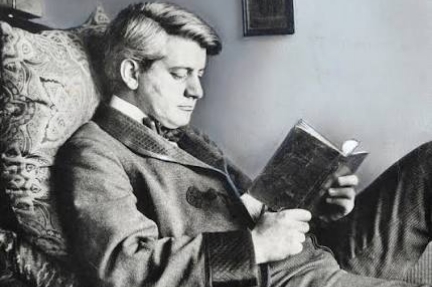
Yet, an equally powerful storyteller — Frank Norris — stands outside popular memory despite shaping the direction of the American novel.
His writing wasn’t polished for comfort.
It confronted the harsh edges of life:
The grip of corporate greed.
The hunger that shapes society.
The struggle of ordinary people swallowed by systems larger than themselves.
His novels like McTeague and The Octopus are bold, raw, and unforgettable reminders of how fiction can expose truth. Frank Norris remains a writer whose work still feels frighteningly relevant today.
Who Was Frank Norris?
Frank Norris (1870–1902) was an American novelist and journalist famous for introducing Naturalism into American fiction. He wrote about:
- Social injustice
- The destructive nature of greed
- Economic exploitation in America
- People trapped by forces beyond their control
Although his career lasted just a few years (he died at only 32), he left behind literature that defines the darker spirit of the early 20th century.
Major Works by Frank Norris — Summaries (Spoiler-Safe)
1️⃣ McTeague (1899)
A gripping story of a San Francisco dentist whose life spirals into obsession, jealousy, and downfall.
The novel explores how raw human instincts — especially greed — can overpower morality.
It remains one of the most unsettling yet important works in American literature.
Key Themes:
- Human instinct vs. social norms
- The corrupting power of money
- Psychological decay
2️⃣ The Octopus: A Story of California (1901)
This novel portrays the battle between California wheat farmers and a powerful railroad monopoly.
It reveals how economic systems manipulate and crush everyday individuals.
Key Themes:
- Corporate greed and capitalism
- Rural America’s struggle for justice
- Human life as part of a larger economic machine
3️⃣ The Pit (1903, published posthumously)
Set in Chicago, it dives into the world of speculative grain trading.
Norris shows the invisible forces governing food and profit — and how lives depend on markets.
Key Themes:
- Commodity trading and economic power
- Desire, ambition, and personal downfall
Why Frank Norris Still Matters
Even though he wrote over a century ago, the subjects he tackled still define society today:
| Issue Norris Wrote About | Why It Still Matters Today |
|---|---|
| Corporate monopolies | Big tech and industry control |
| Class struggle | Rising inequality worldwide |
| Economic exploitation | Modern systems affecting workers |
| Human greed | Wealth obsession in today’s culture |
Frank Norris understood one truth: society’s problems begin when people value profit more than humanity.
The Writing Style of Frank Norris
Frank Norris wrote with:
- Raw emotional intensity
- Deep realism
- Vivid natural descriptions
- Strong psychological insight
His Naturalist approach rejected romantic fantasy.
He believed humans were shaped by environment, biology, and social forces — whether they liked it or not.
Readers often find his books uncomfortable, but that’s what makes them powerful.
My Reflection: Why Reading Frank Norris Feels Like Looking in a Mirror
I expected old literature to feel distant — yet Frank Norris makes modern life visible on every page.
His characters chase dreams that crumble under the weight of greed.
They hunger for respect, money, survival — just like people today.
He writes without judgment, almost like a scientist observing human behavior.
Reading Frank Norris feels like being reminded of truths that society tries to hide:
- Wealth can destroy even good intentions
- Systems built to serve people often control them instead
- We are not always in charge of our destinies
It is uncomfortable.
It is bold.
It is necessary.
His writing gives us permission to see the world as it truly is — and then question it.
Best Frank Norris Quotes
(All short excerpts for fair use)
- “Life was a struggle, and when one is compelled to, one must fight.”
- “We are all puppets—our strings are pulled by unseen hands.”
- “Greed is not a passion but a disease.”
- “The world is a vast machine and we are the smallest cogs.”
- “Civilization is only a veneer over instincts too powerful to ignore.”
Quick Facts — Frank Norris (At a Glance)
| Detail | Information |
|---|---|
| Full Name | Benjamin Franklin Norris Jr. |
| Born | March 5, 1870 — Chicago, USA |
| Died | October 25, 1902 (age 32) |
| Genres | Naturalism, Social Realism |
| Famous Works | McTeague, The Octopus, The Pit |
| Impact | Influenced American Progressive-Era literature |
Pros & Cons of Reading Frank Norris Today
Pros
- Reveals deep social and psychological truths
- Intense, dramatic storytelling
- Historically significant and relevant
- Encourages critical thinking about society
Cons
- Harsh themes may feel emotionally heavy
- Language is older and sometimes complex
- Characters reflect their era’s limited perspectives
Even so, the brilliance outweighs the difficulty.
Conclusion
Frank Norris may not be a household name, but his mark on literature is undeniable.
His novels hold up an unfiltered mirror to society — reflecting the individuality, the suffering, and the unstoppable forces shaping human life.
At a time when inequality and greed feel louder than ever, Frank Norris deserves renewed attention.
His writing reminds us that stories are not only for escape — they are also for awakening.
If you want a book that stays with you long after you close it, walk into the world of Frank Norris.
FAQs About Frank Norris
1. What is Frank Norris best known for?
His novels McTeague and The Octopus, which exposed greed and social injustice.
2. What genre did Frank Norris write in?
He was a leading figure of American Naturalism.
3. Why did Frank Norris die so young?
He passed away due to complications from an appendicitis operation.
4. Are his books difficult to read?
They may feel dense, but the emotional impact and meaning are worth the effort.
5. Is Frank Norris still studied in schools?
Yes — especially in American literature and historical fiction courses.
6. What social issues did he focus on?
Corporate power, capitalism, class struggle, and human instinct.
7. Which book should a beginner start with?
McTeague for psychological insight or The Octopus for social themes.
Thank you for reading!
Stay tuned for more inspiring Books summary, Author spotlight, Trend Books & more get full information on TheBooksx.com
About the Author